Autistic Masking in Children: Signs, Long-Term Toll, and How to Help
Picture this. Your child’s teacher beams at pickup: “She was an absolute angel today!” Then you get home, the front door closes, and within ten minutes your little angel is melting down over the wrong-shaped pasta.
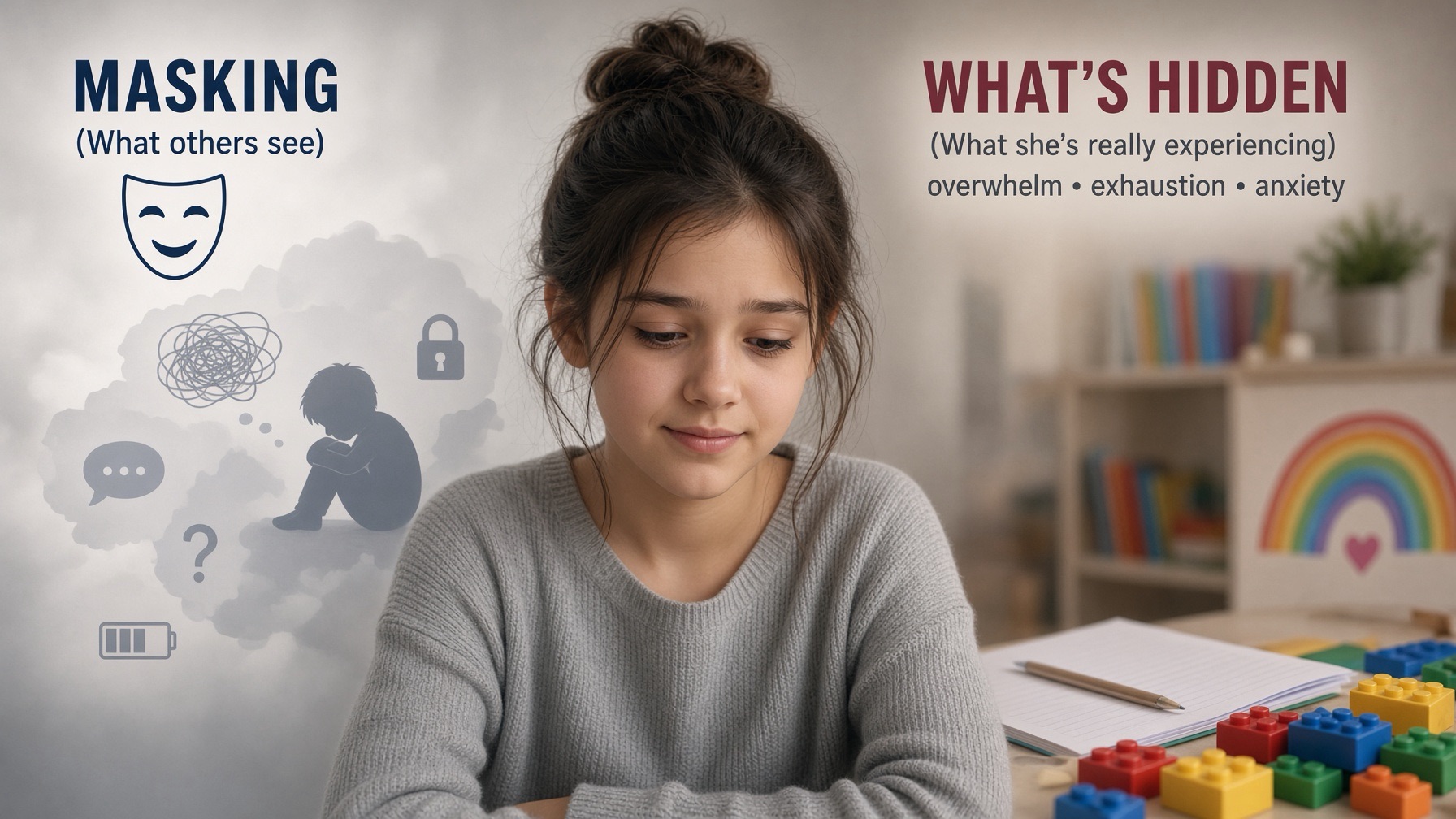
If that sounds familiar, you’re not imagining things, and you’re not doing anything wrong. There’s a good chance your child is masking. Think of it as an invisible costume that some autistic kids put on to get through the day. It can look impressive from the outside. But like any costume worn for hours on end, it gets hot, itchy, and exhausting.
Let’s unzip it together and look at what masking is, why kids do it, and how you can help your child feel free to take it off.
So, what exactly is masking?
Masking (sometimes called camouflaging) is when an autistic person hides or suppresses their natural autistic traits to fit in with what’s expected around them. It’s like running a translation app in your head all day long, converting your natural way of being into something that “looks normal” to everyone else.
Sometimes masking is a conscious choice. Often, especially in children, it happens automatically. Kids pick up very quickly on which behaviors get funny looks, corrections, or teasing, and they start adjusting without even realizing it.
Here’s the key thing to understand: masking doesn’t make autism go away. It just hides it. And hiding something that big takes a lot of energy.
What masking can look like in kids
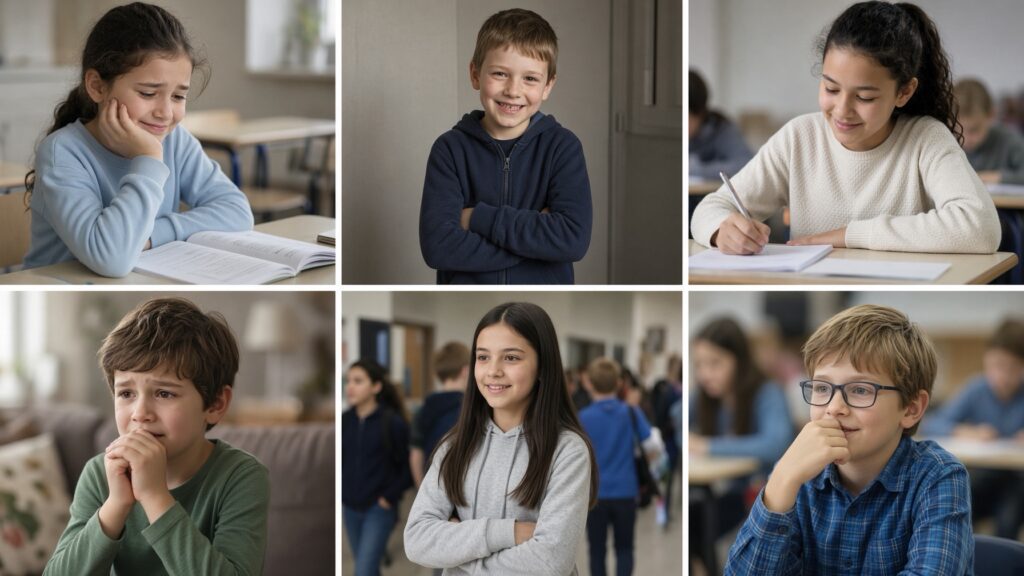
Masking is sneaky by nature, so it can be hard to spot. Here are some common signs:
- Holding in stims. Sitting on their hands instead of flapping, or swapping a big movement for a tiny, hidden one like tapping a toe.
- Forcing eye contact. Staring at someone’s eyes even though it feels uncomfortable, because they’ve been told it’s polite.
- Copying others. Mimicking a classmate’s laugh, phrases, clothes, or interests to blend in. Some kids are brilliant little actors.
- Rehearsing conversations. Practicing what to say ahead of time, or using “scripts” borrowed from TV shows.
- Hiding special interests. Keeping quiet about their love of trains or bugs because other kids think it’s “weird.”
- Pushing through sensory overload. Putting up with scratchy uniforms, loud classrooms, or bright lights without complaint.
- The after-school explosion. Holding it all together at school, then collapsing at home. This one is so common it has a nickname: “after-school restraint collapse.”
If your child is a model student at school and a tornado at home, take it as a compliment. Home is where they feel safe enough to stop performing.
Why do kids mask?
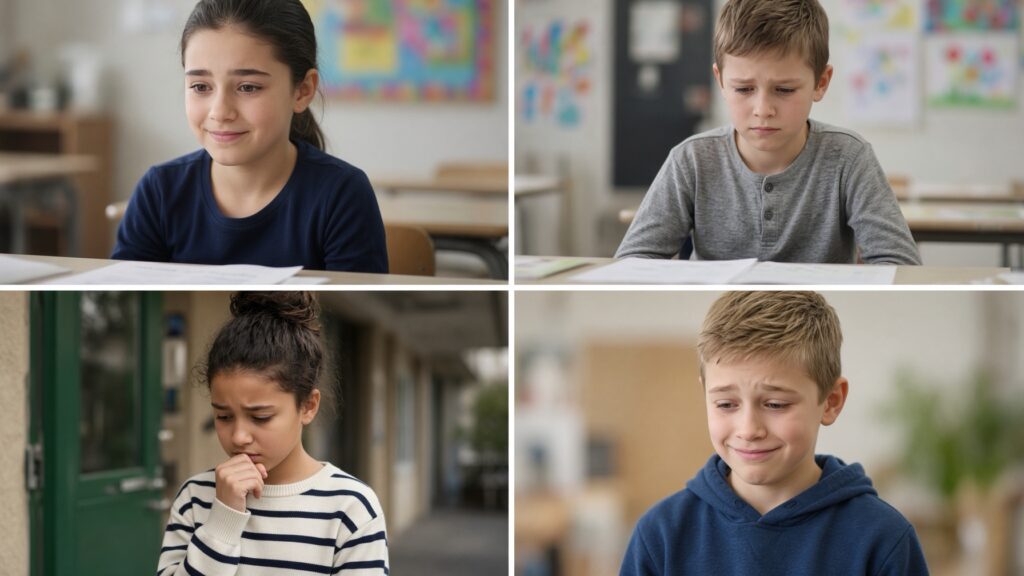
Nobody hands a child a rulebook titled How to Hide Your Autism. Kids learn it from the world around them. Common reasons include:
- Wanting to make friends. Fitting in feels like the ticket to being included.
- Avoiding teasing or bullying. If flapping or info-dumping got them laughed at once, they may not risk it again.
- Staying out of trouble. Some autistic behaviors get mistaken for rudeness or defiance, so kids learn to suppress them.
- Pleasing the grown-ups. Kids notice which behaviors earn praise, and they want that approval.
Girls and kids who are especially socially observant often become very skilled maskers. That’s one reason autism is frequently missed or diagnosed later in girls. They’re simply so good at the costume that nobody notices it’s there.
The toll it takes over the years
Here’s where we put the jokes down for a moment, because this part matters. A costume worn for an afternoon is fun. A costume worn every day for years is a different story. Research and the experiences of autistic adults point to some real long-term costs.
Exhaustion. Masking burns through energy fast. Many autistic people describe feeling completely drained after social situations, even ones they enjoyed.
Autistic burnout. After years of masking, many autistic teens and adults hit a wall. Autistic burnout can bring deep fatigue, a loss of skills they used to have, and a much lower tolerance for sensory input. It often shows up during big transitions, like starting middle school, high school, or college.
Anxiety and depression. Constantly monitoring yourself is stressful. Studies have linked higher levels of masking with higher rates of anxiety and depression in autistic people.
Losing track of who you are. When you spend years being who others expect, it can become hard to know what you actually like, need, or feel. Many late-diagnosed adults describe the moment they realized they’d been performing their whole lives.
Missed support. If a child masks well, teachers and doctors may not notice they’re struggling. That can delay a diagnosis, and the support that comes with it, for years.
The good news? Kids who grow up feeling accepted for who they are have a much better shot at avoiding these pitfalls. And that’s where you come in.
How parents can help: make home a costume-free zone
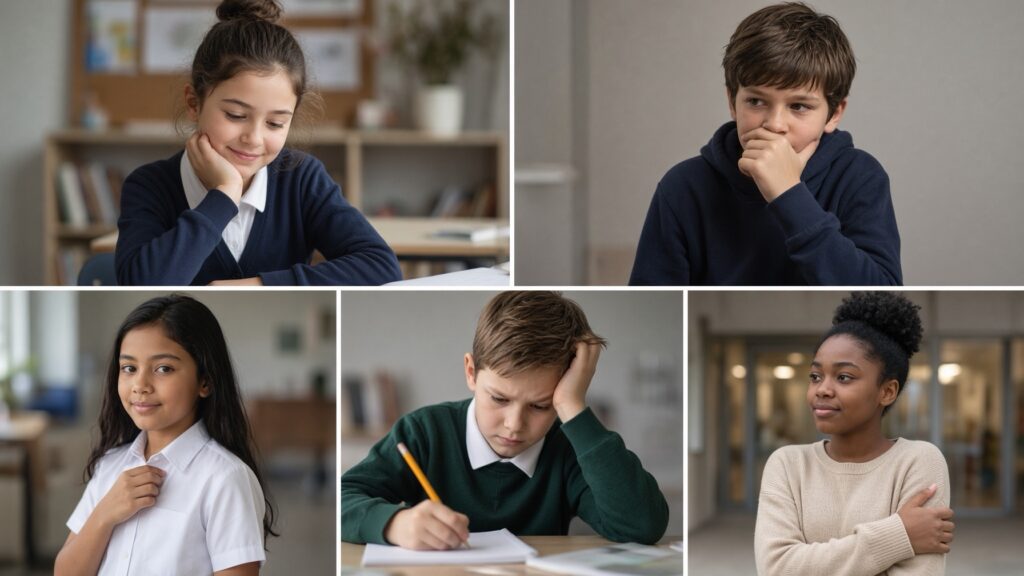
You can’t control the whole world, but you can make your home the one place where the costume comes off. Here’s how:
- Let them stim. Flapping, spinning, humming, bouncing? Let it happen. It’s how many autistic kids regulate and show joy. Bonus points if you join the happy dance.
- Build in decompression time. After school, skip the twenty questions. Offer a snack, a quiet corner, and some downtime before homework or chatter.
- Celebrate their passions. If they want to tell you everything about volcanoes for the fourth time today, lean in. Being truly listened to is a powerful antidote to masking.
- Drop the eye-contact rule. Many autistic kids listen better when they’re not forced to look at your face. Side-by-side chats in the car are golden.
- Name it for them. Kids often don’t realize they’re masking. Gently saying “It looks like you worked really hard to hold it together today” helps them understand their own experience.
- Talk to the school. If your child masks at school and melts down at home, share that with their teacher. Ask about quiet spaces, movement breaks, and sensory supports.
- Show them autistic role models. Books, shows, and creators featuring proud autistic people help kids see that being themselves is something to celebrate, not hide.
One gentle note: some masking is a normal social skill everyone uses, like being polite to a grumpy cashier. The goal isn’t zero masking forever. It’s making sure your child doesn’t feel they have to hide who they are just to be loved.
The bottom line
Masking is a survival skill your child picked up because the world isn’t always built for autistic brains. It’s clever, it’s resourceful, and it’s tiring. You don’t need to rip the costume off. You just need to make sure your child always knows it’s safe to take it off with you.
So the next time your little angel from school turns into a pasta-shape critic at home, take a breath and smile. That meltdown might just mean you’re their safe place. And that’s one of the best things a parent can be.